Amigurumi Animals
Amigurumi Bear Pattern: A Simple Seated Teddy for Beginners
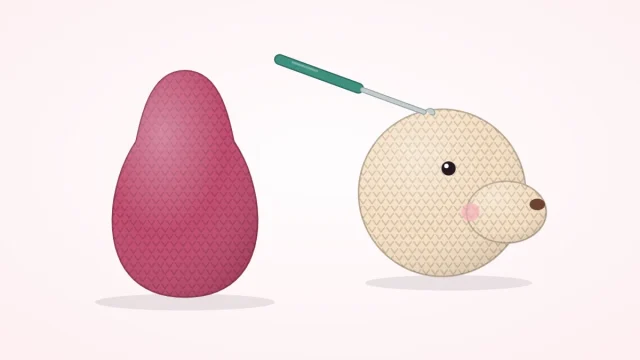
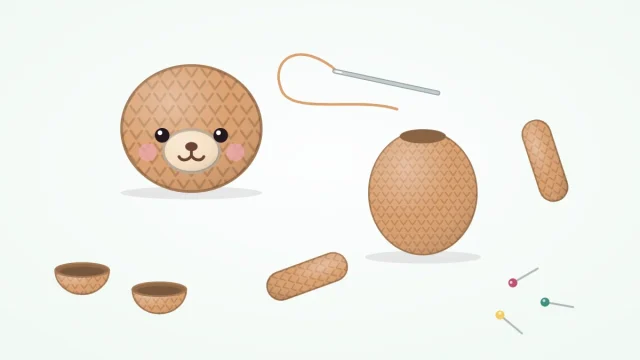
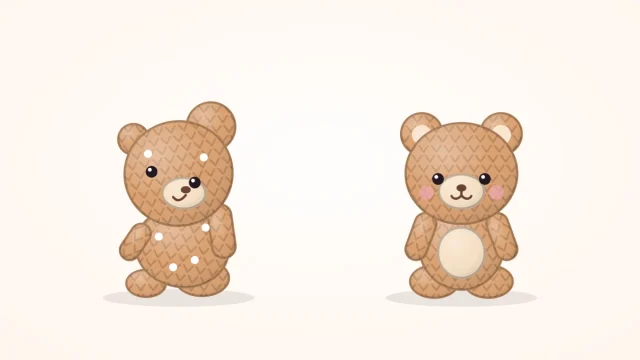
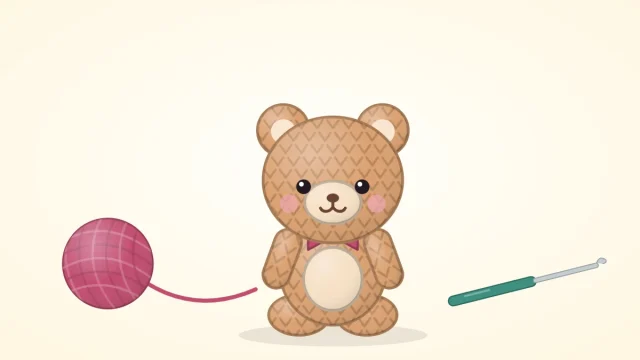
A simple seated teddy bear worked in nine small pieces: head, body, round ears, muzzle, arms and legs, with the assembly order and an embroidered face.
Crochet amigurumi tutorials for beginners
30 tutorials published
A simple seated teddy bear worked in nine small pieces: head, body, round ears, muzzle, arms and legs, with the assembly order and an embroidered face.
How to shape amigurumi beyond evenly spaced increases: staggered rounds, increases stacked on one side, back-loop rounds, taller stitches and light needle sculpting, with three short practice pieces.
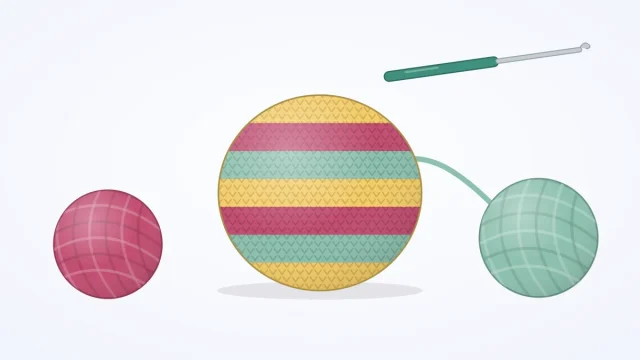
How to change yarn color on the last yarn over, soften the jog that spiral rounds leave in stripes, choose between carrying and cutting, and secure the tails inside the toy.
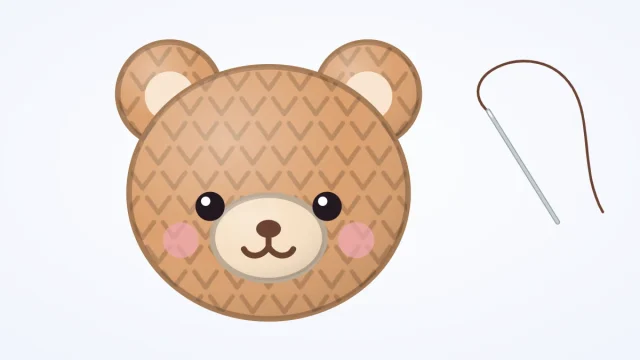
Where to place eyes so a toy reads as cute, how safety eyes compare with embroidered ones, and how to stitch noses, mouths, sleepy eyes, eyebrows and cheeks with no visible ends.
Assembly decides how a finished toy looks. How to pin and check placement, when to use whip stitch or mattress stitch, and how to sew a head on so it does not wobble.
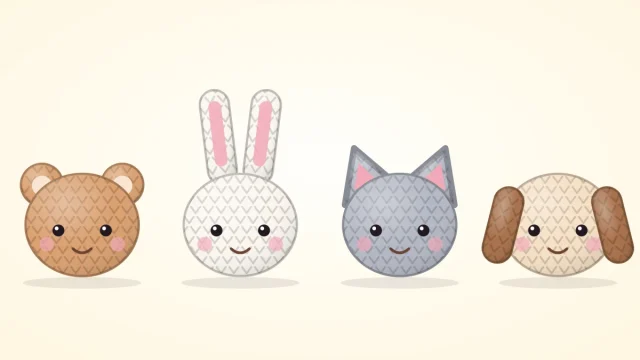
Four short ear patterns (round cup, long, pointed and floppy) and where each one sits on the head, so the same plain ball can become a bear, bunny, cat or dog.
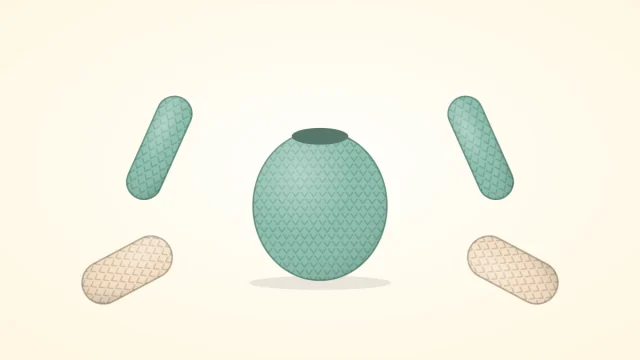
How to size, stuff and close crocheted limbs, an arm pattern and a leg pattern, and how to join two legs into a body with a short chain.
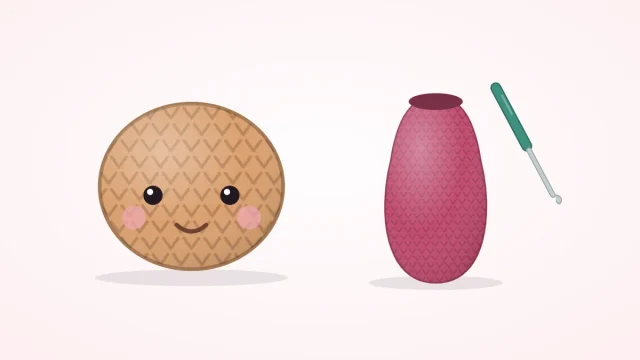
How head-to-body proportions change a toy's character, when to work the two as separate pieces or as one, and a head and body pattern with matching neck openings.
A fault-by-fault troubleshooting list for beginner amigurumi: gaps, inside-out pieces, lost counts, bumpy decreases, lumpy stuffing and lopsided limbs, each with its cause and fix.
A practical guide to stuffing crocheted toys: which filling to use, how firm each part should be, how to avoid lumps, when to stuff during the decrease rounds, and how to add weight safely.
Why a standard decrease leaves a bump and a gap on stuffed pieces, how to work the invisible decrease through the front loops, and a small practice ball that puts both methods side by side.
Six shapes beyond the ball, each with the increase rule that creates it, a short example pattern and the body parts it usually becomes.