Amigurumi Hook Size: How to Choose the Right Crochet Hook
Amigurumi needs a smaller hook than the yarn label recommends. A yarn-weight chart, a quick density test and what to change if your tension runs tight or loose.
Tutorial at a glance
Materials
- Worsted weight yarn in a light color
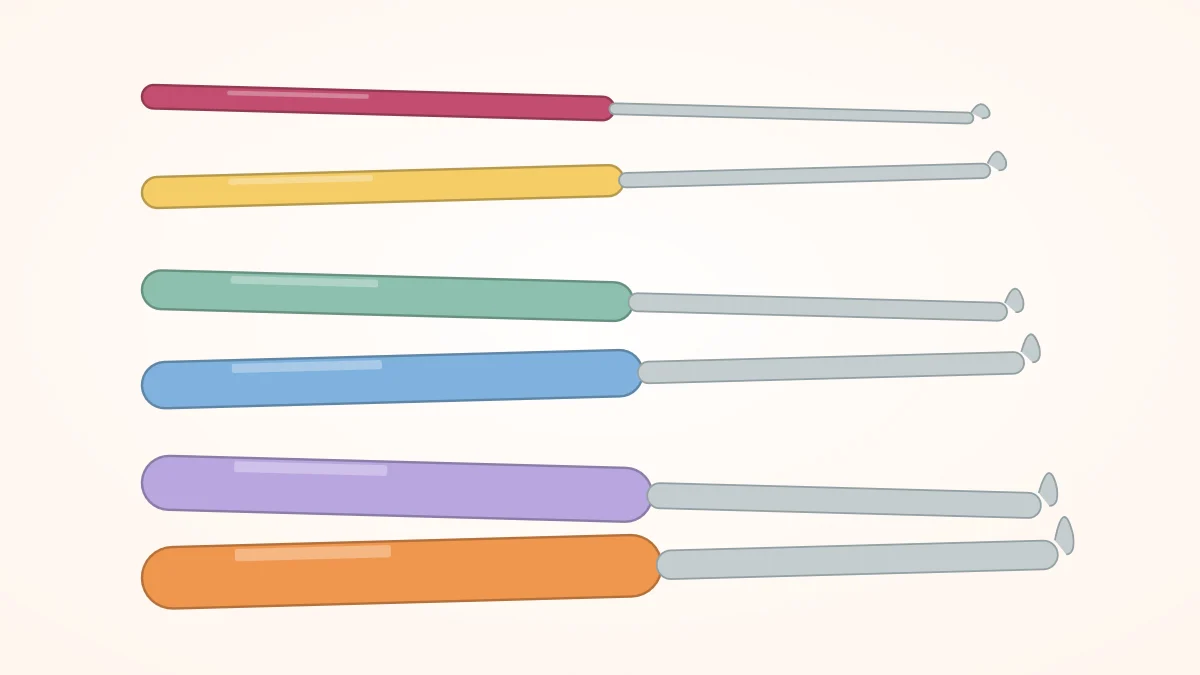
- 3.5 mm (US E-4) crochet hook
- A hook 0.5 mm smaller and one 0.5 mm larger
- Locking stitch marker
- Small handful of white polyester fiberfill
- Scissors
The hook size printed on a yarn label is chosen for scarves and sweaters, where fabric is supposed to drape. A stuffed toy needs the opposite: stiff, closed fabric that holds its shape and hides the filling. That is why the right amigurumi hook size is almost always smaller than the label suggests, and why one ball of yarn can call for two different hooks depending on what it becomes.
Why amigurumi uses a smaller hook
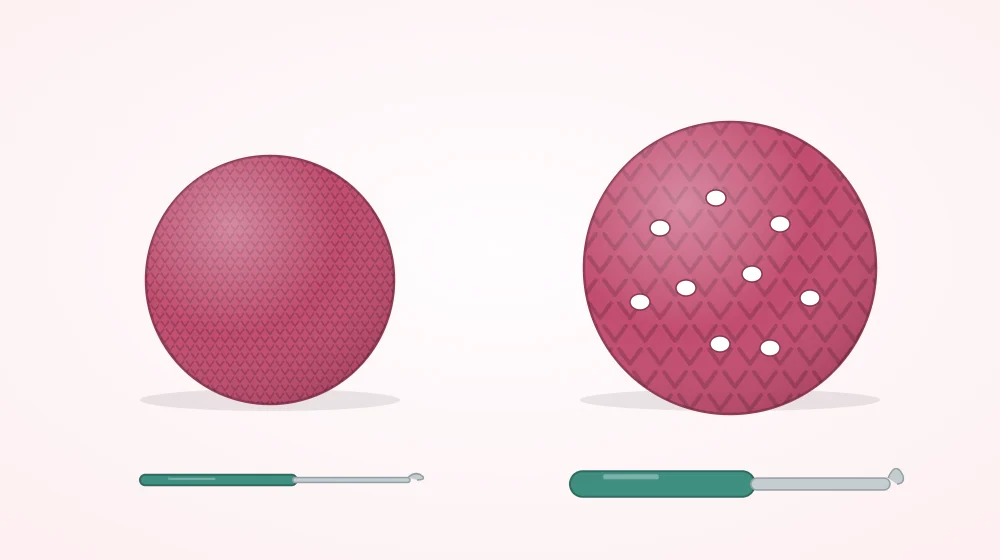
The hook sets the size of every loop. A large hook makes large loops with space between them; a small hook pulls the same yarn into compact stitches that sit shoulder to shoulder. In a garment those spaces make the fabric soft. In a toy they become holes, and once the piece is stuffed the fabric stretches and the holes open further, so white fiberfill shows between the stitches.
Dense fabric does three jobs at once:
- It keeps the stuffing inside and out of sight.
- It lets a piece stand firm instead of sagging under its own weight.
- It gives stitches a crisp outline, so increases and decreases blend into the surface.
The usual rule is to drop one to two full millimeters below the label’s recommendation, then adjust from there.
Yarn weight to hook size chart
Treat this amigurumi hook size chart as a starting point, not a ruling. Yarns in the same weight category vary in thickness, and hands vary in tension. Patterns on this site assume worsted weight (#4 medium) yarn with a 3.5 mm (US E-4) hook unless they say otherwise.
| Yarn weight | Typical label hook | Amigurumi starting hook |
|---|---|---|
| Fingering (#1 super fine) | 2.25-3.5 mm (US B-1 to E-4) | 2.0-2.25 mm (up to US B-1) |
| Sport (#2 fine) | 3.5-4.5 mm (US E-4 to 7) | 2.5-2.75 mm (US C-2) |
| DK (#3 light) | 4.5-5.5 mm (US 7 to I-9) | 3.0-3.25 mm (US D-3) |
| Worsted (#4 medium) | 5.5-6.5 mm (US I-9 to K-10.5) | 3.5 mm (US E-4), up to 4.0 mm (US G-6) |
| Bulky (#5) | 6.5-9 mm (US K-10.5 to M-13) | 4.5-5.5 mm (US 7 to I-9) |
| Super bulky (#6), including plush chenille | 9 mm and up (US M-13 and larger) | 6.0-7.0 mm (US J-10 and up) |
US letter sizes are not perfectly consistent from one maker to another, and metric sizes such as 2.0 mm, 2.5 mm and 3.0 mm have no everyday letter at all. Read the millimeter number stamped on the hook and treat the letter as a nickname. If the yarn itself is still undecided, the guide to the best yarn for amigurumi covers fiber and weight.
How to test fabric density
A small cup of fabric shows more than any chart. Abbreviations used below: MR = magic ring, sc = single crochet, inc = increase (2 sc in the same stitch), Rnd = round. Work in a continuous spiral with a stitch marker in the first stitch of each round.
Test cup (make 1 per hook you are comparing)
- Rnd 1: 6 sc in MR (6)
- Rnd 2: inc x 6 (12)
- Rnd 3: (sc 1, inc) x 6 (18)
- Rnds 4-6: sc 18 (18)
- Do not fasten off. Leave the loop on a stitch marker so the yarn can be pulled out and reused.
Then run three checks:
- The stretch check. Push a pinch of white fiberfill into the cup and stretch the fabric over it with your thumbs. If white shows clearly between the stitches, go down by 0.25 to 0.5 mm.
- The hook check. If the hook has to be forced into each stitch, the yarn splits, or your hand tires after a few rounds, the fabric is too tight. Go up by 0.25 to 0.5 mm.
- The shape check. Set the empty cup on the table. Good toy fabric holds its bowl shape on its own; fabric that collapses flat is too loose.
Inline vs tapered hook heads
Two hooks with the same millimeter size can feel very different because of how the head is cut.
- Inline: the head is the same width as the shaft, with a deep, flat-cut throat. It grips the yarn firmly and tends to keep loops the same size, which helps even tension. Some people find that the sharper throat catches on tight stitches.
- Tapered: the throat narrows gradually and the head is rounder. It slides in and out of tight stitches smoothly, but loops formed on the narrow part of the throat come out smaller than loops formed on the shaft, so tension can wander.
Neither is the correct one. With a tapered hook, slide each loop fully onto the shaft before completing the stitch.
Handles and comfort
Amigurumi means thousands of small, tight stitches, and a thin bare metal hook concentrates all the grip pressure in a narrow line across the fingers. An ergonomic handle, thicker and usually soft or shaped, spreads that pressure over more of the hand. It does not change the stitches; it changes how long crocheting stays comfortable.
Hook material affects glide. Smooth metal lets yarn slip quickly; wood and bamboo have more drag, which slows tight stitches down. Whatever the handle, stop when a hand starts to ache.
If your tension is very tight or very loose
Very tight
Signs: stitches are hard to enter, pieces come out smaller than the pattern says, and the fabric feels like cardboard. Go up 0.5 mm, hold the working yarn with one less wrap around the fingers, and make sure each loop travels up to the full width of the shaft.
Very loose
Signs: gaps appear even with the recommended hook, and pieces come out large and floppy. Go down 0.5 mm, or even a full millimeter, and check the test cup again. Gaps that show stuffing are also the first entry in the list of common amigurumi mistakes, and good stuffing technique will not hide fabric that is simply too open.
Watch out
Use one hook for every piece of the same toy. Switching between two hooks of the same nominal size but different makes can change the gauge enough that a pair of arms or ears no longer matches.
Changing the hook to change the toy
Hook and yarn move together. Going down to fingering yarn and a 2.0 mm hook shrinks any pattern without touching the stitch counts, which is the whole idea behind mini amigurumi. Going up to bulky yarn and a 5.0 mm hook does the reverse. Once a hook passes the stretch check, a plain amigurumi ball is a sensible first full piece to make with it.
Frequently asked questions
Can I use the hook size printed on the yarn label for amigurumi?
Usually not. Label sizes are meant for fabric that drapes, and in a stuffed toy that fabric has gaps that show the filling. Start one to two millimeters smaller than the label and check a small stuffed test piece.
Does a different hook size change the size of the finished toy?
Yes. A smaller hook makes smaller stitches, so the same pattern comes out smaller and firmer; a larger hook makes it bigger and softer. The stitch counts in the pattern stay exactly the same.
Do I need a full set of hooks to start?
No. One hook that matches your yarn is enough for a first project, for example 3.5 mm for worsted weight. A second hook half a millimeter smaller is useful if the first one leaves gaps.